Proof before parts
The first checks should include capacitor and contactor testing, coil temperature and airflow check, static pressure reading, condensate safety review before a major repair or replacement is recommended.
cold air recovered. Fast air-conditioning diagnostics for warm rooms, frozen coils, failing capacitors, airflow restrictions, and late-summer breakdowns.
Licensed, Bonded & Insured — California Contractors State License Board
Related symptoms, same-trade services, local demand clusters, and equipment pages are linked here so a homeowner can move sideways without starting over.
This is the standard the page is written around: measured findings first, related trade risks second, and clear owner decisions before work expands.
The first checks should include capacitor and contactor testing, coil temperature and airflow check, static pressure reading, condensate safety review before a major repair or replacement is recommended.
The proposal should explain same-visit repair when parts are available, failure explanation in plain English, repair versus replacement comparison, filter and maintenance notes so the owner knows what is included, excluded, and still uncertain.
September and October heat events expose marginal parts. Valley attics can punish ducts and air handlers. Those notes change parts, access, timing, and sometimes the trade sequence.
AC Repair in Los Angeles should begin with evidence, not assumptions. Common calls include warm supply air, frozen indoor coil, outside unit humming, breaker trips, weak airflow at remote rooms, and water around the furnace or ceiling register. Those symptoms can overlap, so the technician needs to test the system instead of replacing the most familiar part. In Los Angeles homes, the surrounding conditions often matter: older ducts, crowded panels, tight garages, hillside drainage, coastal corrosion, mature tree roots, or remodel work from several eras.
The goal is to restore function while giving the homeowner a clear plan. Sometimes that means a same-visit repair. Sometimes it means a staged upgrade. Sometimes the honest answer is that the equipment is only the visible part of a larger design problem.
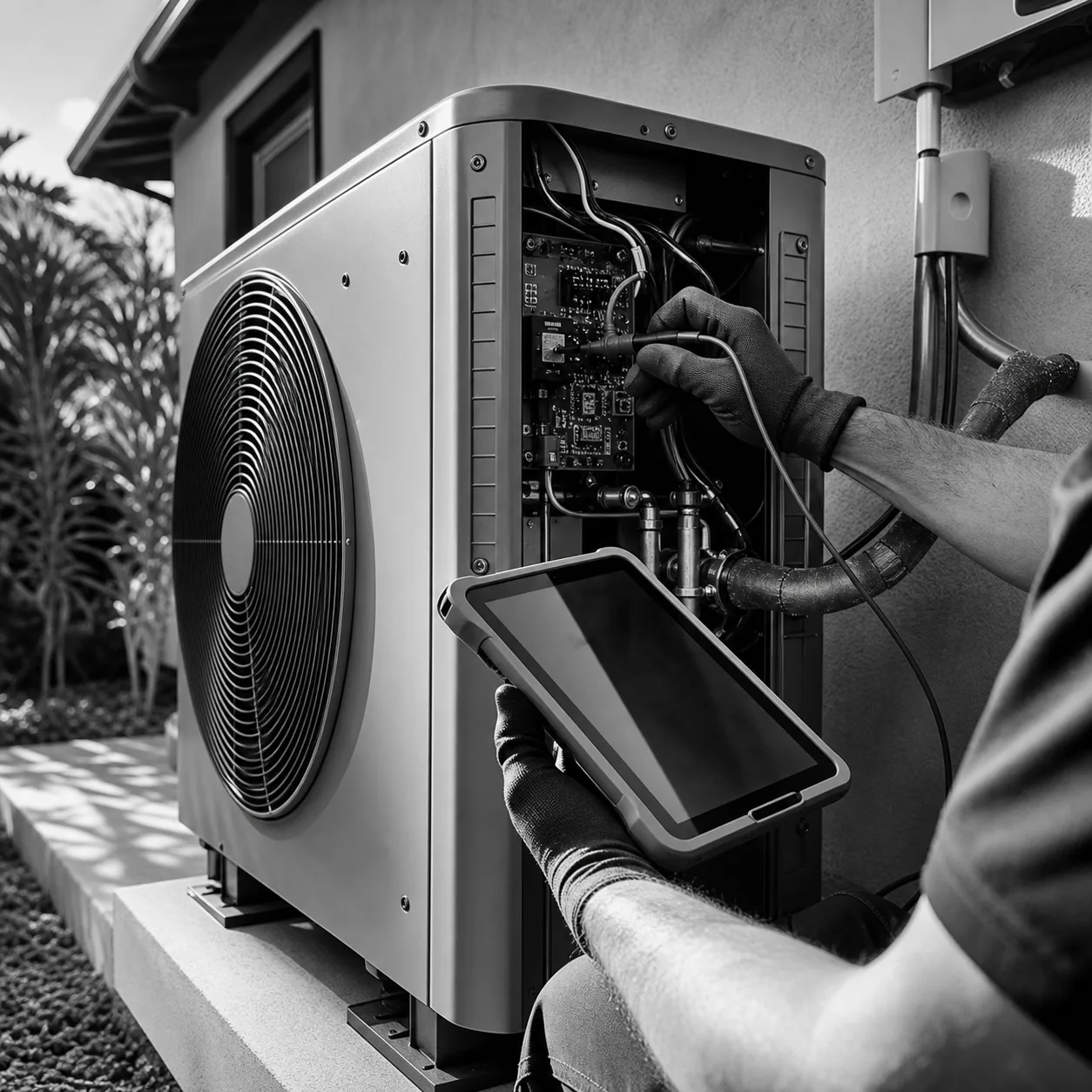
The diagnostic path for AC Repair includes capacitor and contactor testing, coil temperature and airflow check, static pressure reading, condensate safety review, refrigerant superheat/subcooling where applicable, and duct and filter restriction review. The exact order changes by symptom, but the standard is the same: make the condition safe, verify the complaint, test likely causes, document the findings, and explain the repair in plain English. This approach reduces guesswork and helps prevent repeat visits for the same unresolved condition.
For homeowners, the important thing is transparency. You should know what was measured, what was seen, what is urgent, what can wait, and what might change once hidden conditions are exposed. That is how an estimate becomes a working decision tool.
September and October heat events expose marginal parts., Valley attics can punish ducts and air handlers., Beach-area condensers need coil cleaning without harsh damage., and Urban dust loads filters faster than owners expect. These local conditions are why generic national advice often misses the mark in Los Angeles. A coastal condenser may age differently than a Valley condenser. A hillside water heater replacement may need different access and drainage planning than a garage swap in a flat neighborhood. A panel upgrade in a remodel should account for future loads before the walls close.
The best service visit reads the property quickly and adjusts the scope. That means asking about remodel plans, comfort history, recurring clogs, prior breaker trips, HOA access, parking, pets, shutoffs, and whether anyone in the home is vulnerable to heat, smoke, or loss of hot water.
The deliverables for this service include same-visit repair when parts are available, failure explanation in plain English, repair versus replacement comparison, filter and maintenance notes, system readings after startup, and photos of access or safety issues. A repair option should be specific enough to compare. A replacement option should explain why the system, size, capacity, or configuration fits the home. When the work touches permits, utility coordination, or inspection, those steps should appear in the scope instead of arriving as surprise friction later.
Replacement is not always the right move. But when equipment is unsafe, obsolete, repeatedly failing, or mismatched to new household demands, continuing to repair can be the expensive path. A good recommendation explains both the technical reason and the practical tradeoff.
A well-run appointment starts before arrival. Photos, model numbers, parking notes, gate codes, building rules, and access details help the technician bring the right tools and avoid wasting time. On site, work areas should be protected, findings should be explained before larger work begins, and the technician should leave the home cleaner than the repair process required.
For urgent calls, the first priority is safety and containment. For planned work, the first priority is scope clarity. Both paths end with the same expectation: the homeowner understands what was done, why it was done, and what to watch next.
For ac repair in Los Angeles, choose a company that can explain the likely cause, test the surrounding system, and coordinate related trades when needed. HVAC, plumbing, and electrical systems increasingly overlap because heat pumps, EV chargers, water heaters, panels, drains, and controls all affect each other in modern homes.
Book service when the symptom is active, repeatable, unsafe, or starting to affect comfort. Do not wait on burning electrical odors, active leaks, sewage backup, repeated breaker trips, no cooling during heat, or water heater safety concerns.
Our AC died on the second day of the September heat wave and the Valley was already cooking. Tech came out same afternoon, found a swollen run capacitor and a contactor with pitted points, swapped both, then actually measured the temperature split at the supply and return before leaving. He also flagged that our 18-year-old condenser is showing acid signs and gave us a replacement window of next spring, not a panic sale today. Honest call.
AC was barely cooling. Tech came out, checked static pressure first, then the filter, then refrigerant. Found a clogged coil that the previous service had ignored. Cleaned the coil properly with non-acidic cleaner (coastal aluminum is fragile), rinsed, dried, restarted. Temp split went from 14 to 21 degrees in one visit. He showed me before and after readings.
AC was blowing room temperature air for two days during the heat dome. Tech showed up in a labeled van with parts on hand. Diagnosed a failed TXV (thermal expansion valve), had a replacement on the truck, pulled vacuum, recharged to manufacturer subcool spec, started up. Took readings to confirm proper operation before leaving. He even cleaned the outdoor coil free of charge while he was waiting on the vacuum to hold.
Common causes include restricted airflow, a failed capacitor, dirty coils, refrigerant issues, or a compressor/control problem. A proper check should measure both the air side and the electrical side.
Yes, but the ice is a symptom. The cause may be airflow restriction, low refrigerant, a dirty coil, blower trouble, or controls. The system needs to thaw before final readings are reliable.
A small repair can be reasonable. A major repair on an old, inefficient, or poorly ducted system should be compared against replacement, especially if comfort has been bad for years.
Send the symptom, photos if you have them, the ZIP code, and any access notes so the first visit starts with the right diagnostic path.
Active leak, sewage backup, burning electrical smell, or repeated breaker trips? Stop using the affected system and call instead of booking online.
Good home service is not just speed. It is the quality of the first diagnosis, the clarity of the scope, and whether the technician names the hidden conditions before they become expensive surprises.
HVAC calls should include temperature, airflow, electrical, and access checks. Plumbing calls should include pressure, isolation, fixture pattern, and water heater safety. Electrical calls should include circuit, panel, load, and device review.
The proposal should explain the confirmed cause, what could change price, which related trade may matter, and what risk remains if the homeowner chooses the smaller repair.
Coastal corrosion, Valley heat, hillside access, older wiring, slab leaks, shared buildings, ADUs, and EV charging can all turn a simple symptom into a whole-home systems decision.