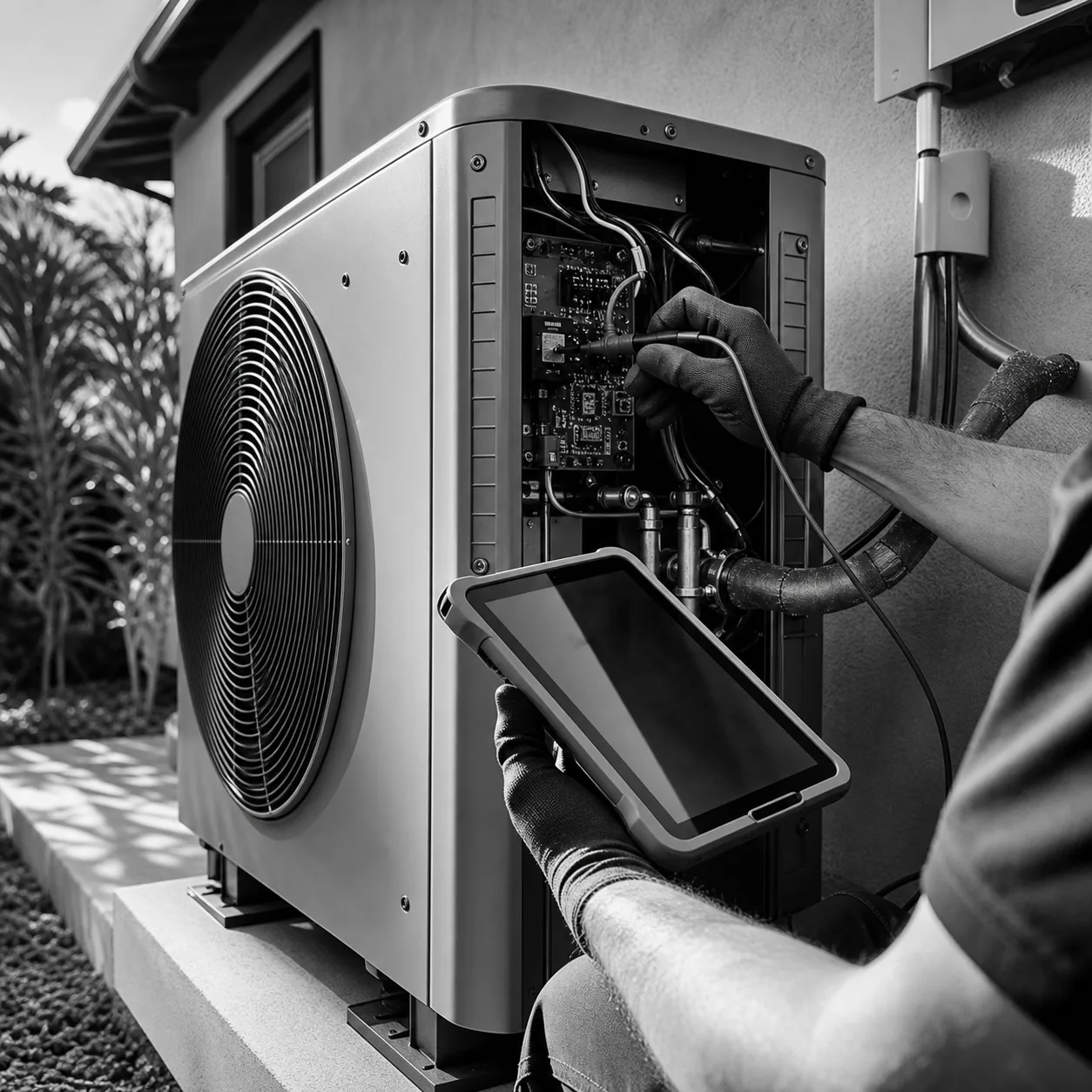
HVAC
Los Angeles diagnostics
AC repair, heat pumps, furnaces, ductless systems, ductwork, and indoor air quality.
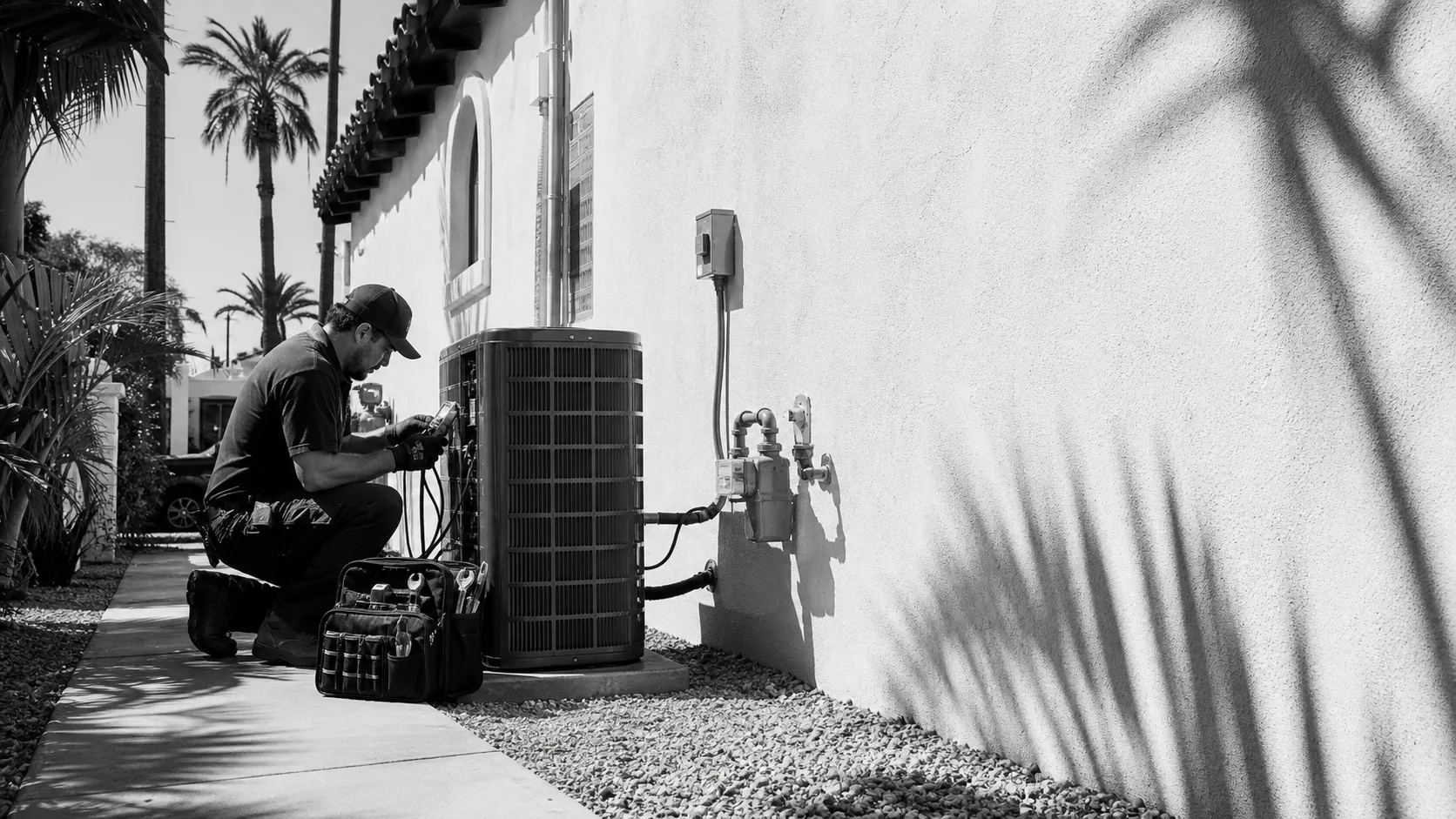
Same-day diagnostics for no-cool AC, active leaks, breaker trips, water heater failures, panel capacity, and EV charger planning across Los Angeles.
One field plan for the whole house. HVAC, plumbing, and electrical handled together — not three separate vendors blaming each other.
Built for LA homes with coastal corrosion, Valley heat, hillside access, older wiring, tankless conversions, EV chargers, ADUs, and remodel layers that do not behave like a textbook.
Licensed, Bonded & Insured — California Contractors State License Board
Use these links like dispatch shortcuts: start with the trade, the symptom, or the part of Los Angeles that matches the property.
AC repair, heat pumps, furnaces, ductless systems, ductwork, and indoor air quality.
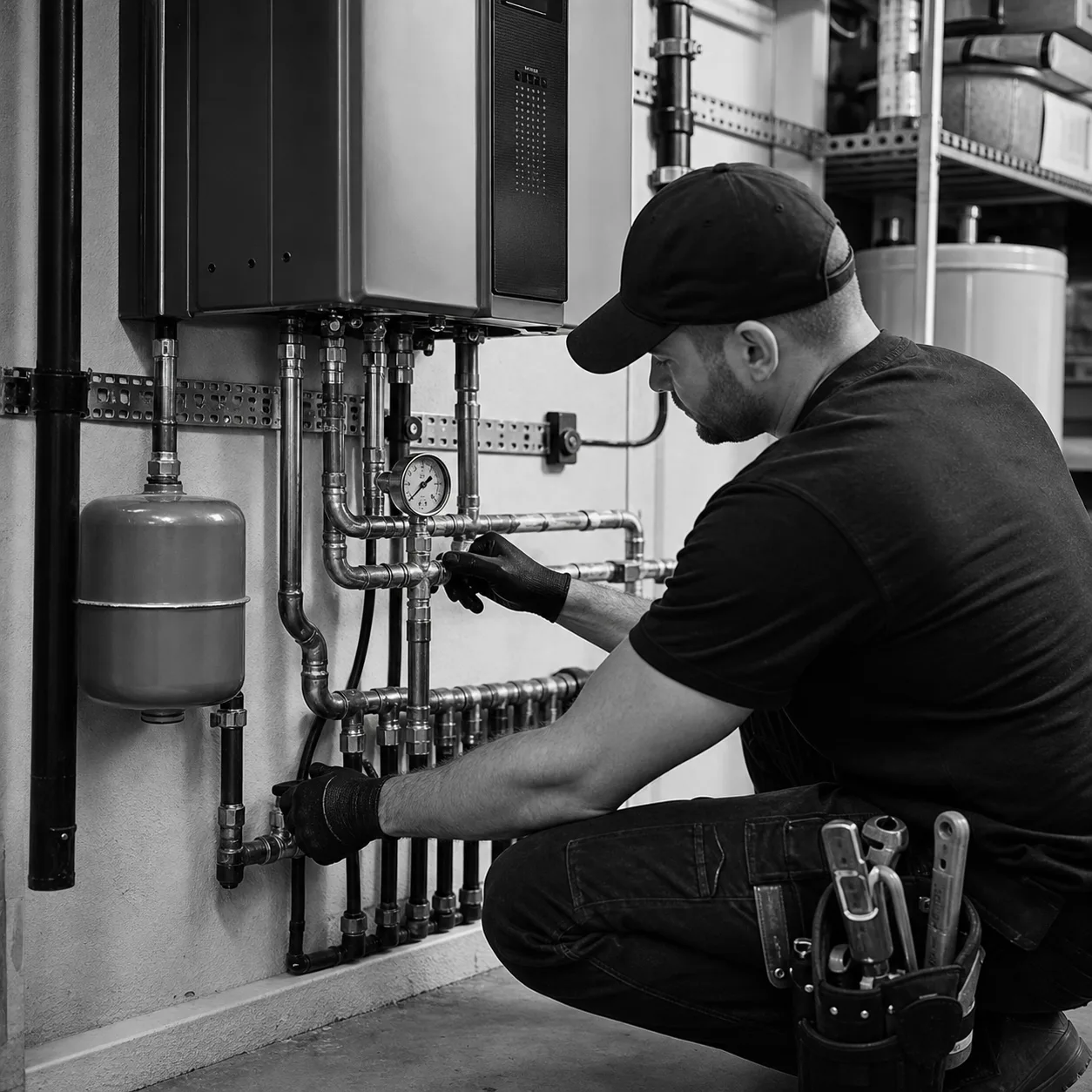
Leaks, drains, water heaters, tankless systems, pressure, gas lines, and sewer diagnostics.
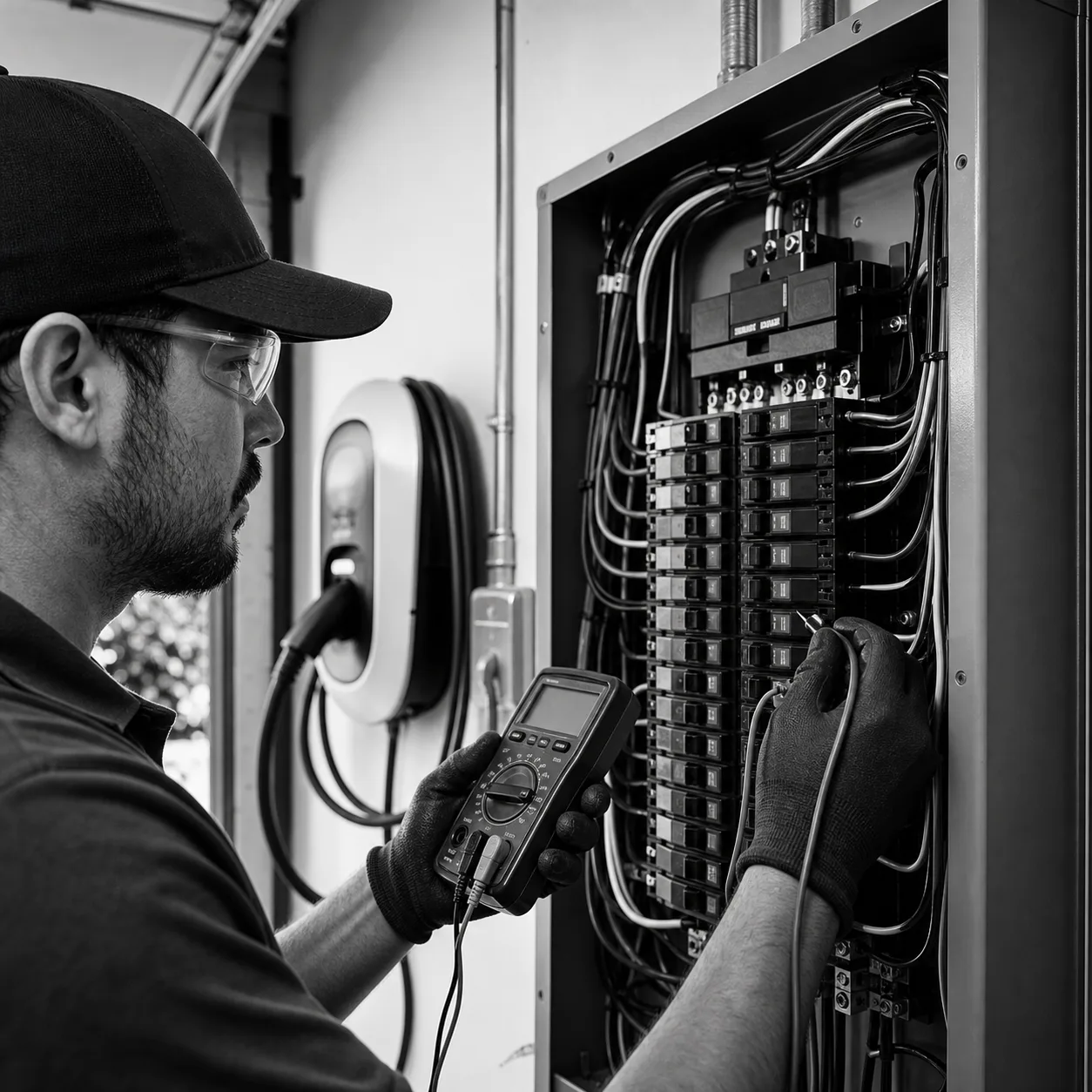
Electrical repair, panels, EV chargers, dedicated circuits, rewiring, and load planning.
Los Angeles County has more than 3.7 million housing units and more than 3.4 million households per recent Census QuickFacts. That scale matters because no single HVAC, plumbing, or electrical script fits every property. A Santa Monica condo, a Woodland Hills ranch, a Silver Lake hillside home, and a Downtown loft can all need the same service category for completely different reasons.
That is why this site is organized around real local conditions: coastal equipment exposure, Valley cooling load, canyon access, multifamily coordination, old drain materials, water heater bracing, EV charger load planning, and the 2025 California Energy Code context for heat pumps and electric readiness.
Our AC died on the second day of the September heat wave and the Valley was already cooking. Tech came out same afternoon, found a swollen run capacitor and a contactor with pitted points, swapped both, then actually measured the temperature split at the supply and return before leaving. He also flagged that our 18-year-old condenser is showing acid signs and gave us a replacement window of next spring, not a panic sale today. Honest call.
Two-zone system, upstairs always 8 degrees warmer than down. Three previous companies wanted to sell us a bigger condenser. These guys took static pressure readings, found a crushed flex run in the attic and an undersized return grille feeding the upstairs handler. Fixed the duct, upsized the return, balanced the dampers. The upstairs now matches the thermostat within 1 degree. Total cost was a fraction of a new system.
1928 Spanish bungalow, gas furnace was on its last legs and we wanted to electrify before next winter. They actually did a Manual J on it instead of guessing tonnage. Specced a 2.5-ton variable-speed heat pump with a return-air enlargement and tied it to a new 60-amp circuit. Permit pulled and inspected by LADBS. House is quieter and the line set under the eave is barely visible. They thought about the aesthetics too.
First cold morning of December the furnace clicked and locked out. Old craftsman closet furnace, 22 years old. Tech tested the flame sensor, igniter, pressure switch, and gas valve in order — turned out to be a cracked ceramic igniter. Replaced it, checked carbon monoxide at the vent, vacuumed the cabinet, and showed us the readings. He was upfront that the heat exchanger has another 2-3 years if we want to bridge to a heat pump conversion instead of replacing furnace + AC separately.
Converted our detached garage into a recording studio and needed cooling that did not punch through the walls acoustically. They speced a 12K wall-mount with a low-static condenser placed behind a sound baffle on the side yard, hidden line-set with a paintable cover, and a dedicated 20-amp circuit from the main panel. Permit, inspection, the works. The mini-split is quieter than the studio computer fan.
Kitchen sink had a slow leak under the cabinet that turned out to be three different small leaks: a corroded angle stop, a worn basket strainer, and the disposal flange. Plumber pulled everything, swapped the angle stops to quarter-turn ball valves, re-bedded the strainer with fresh plumber putty, and re-sealed the disposal. Took photos of everything and gave me a labeled diagram. Cabinet bottom is dry for the first time in years.
These pages cover symptom intent safely: causes, checks, what not to do, local risks, and the service path. They are not area swaps.
The brand pages avoid fake certification language. They explain common equipment, repair paths, installation watchouts, and Los Angeles conditions that change the job.
A practical 2026 guide to heat pump sizing, ducts, electrical readiness, comfort expectations, permits, and LA microclimates.
Tank, tankless, and heat pump water heater decisions for LA homes, with notes on bracing, venting, pressure, recirculation, and garage realities.
How to think about 100-amp services, 200-amp upgrades, load calculations, EV chargers, heat pumps, water heaters, permits, and utility coordination.
A homeowner guide to filters, sealed homes, HVAC fan settings, portable HEPA, duct leakage, and smoke-day maintenance in LA County.
A homeowner-first guide to no-cool AC during September and October LA heat events: safe checks, why the breaker matters, frozen coils, and how to triage with dispatch.
A 2026 LA-specific tankless water heater guide covering gas line sizing, venting paths, condensate routing, recirculation, and the homes where a tank or hybrid is actually smarter.
A practical 2026 guide to LA panel upgrades — when 200-amp is enough, when 320/400-amp is the right answer, LADWP coordination, and what drives the actual cost.
How to spot a slab leak, what diagnostics actually narrow the location, and why a hot-water re-route through the attic can be cheaper and less invasive than breaking concrete.
A 2026 cost guide to LA Level 2 EV charger installation — panel review, conduit runs, hardwire vs plug, load management, LADWP coordination, and avoiding the upsell traps.
A practical guide for owners of pre-1970 LA homes: how to assess existing wiring, when to fully rewire vs stage by room, insurance implications, and what a realistic rewire timeline looks like.
Send the symptom, the ZIP code, and any equipment photos you have. The visit starts cleaner when dispatch knows what failed and how to access it.
Active leak, sewage backup, burning electrical smell, or repeated breaker trips? Stop using the affected system and call instead of booking online.
Good home service is not just speed. It is the quality of the first diagnosis, the clarity of the scope, and whether the technician names the hidden conditions before they become expensive surprises.
HVAC calls should include temperature, airflow, electrical, and access checks. Plumbing calls should include pressure, isolation, fixture pattern, and water heater safety. Electrical calls should include circuit, panel, load, and device review.
The proposal should explain the confirmed cause, what could change price, which related trade may matter, and what risk remains if the homeowner chooses the smaller repair.
Coastal corrosion, Valley heat, hillside access, older wiring, slab leaks, shared buildings, ADUs, and EV charging can all turn a simple symptom into a whole-home systems decision.